About
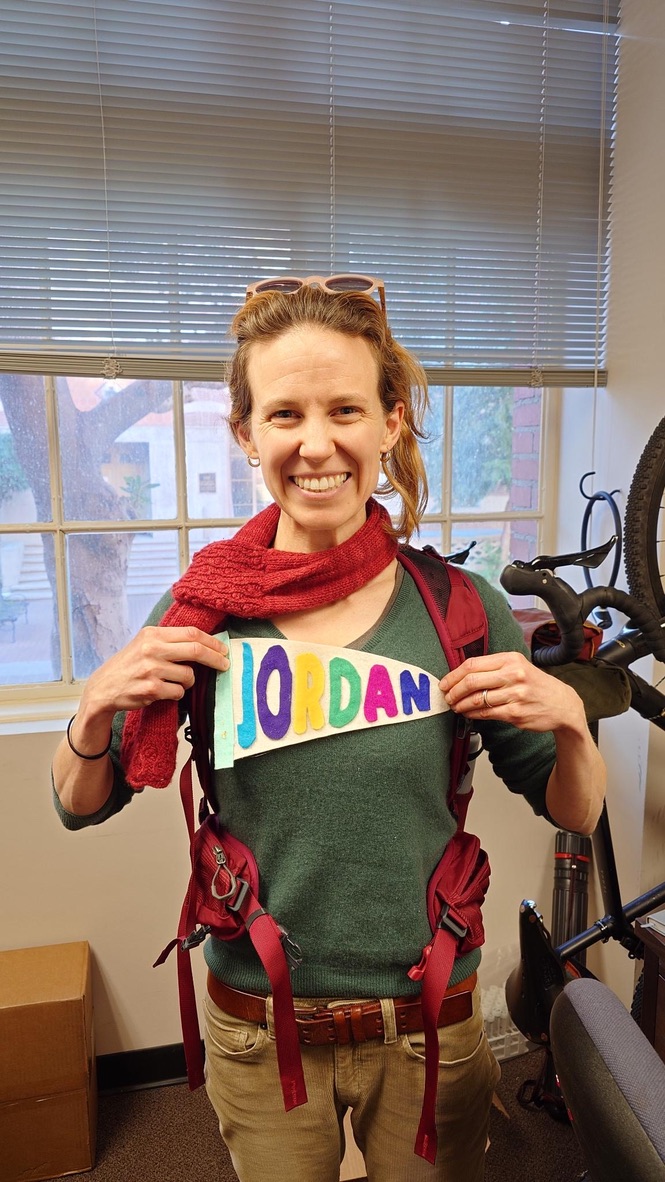
Biography
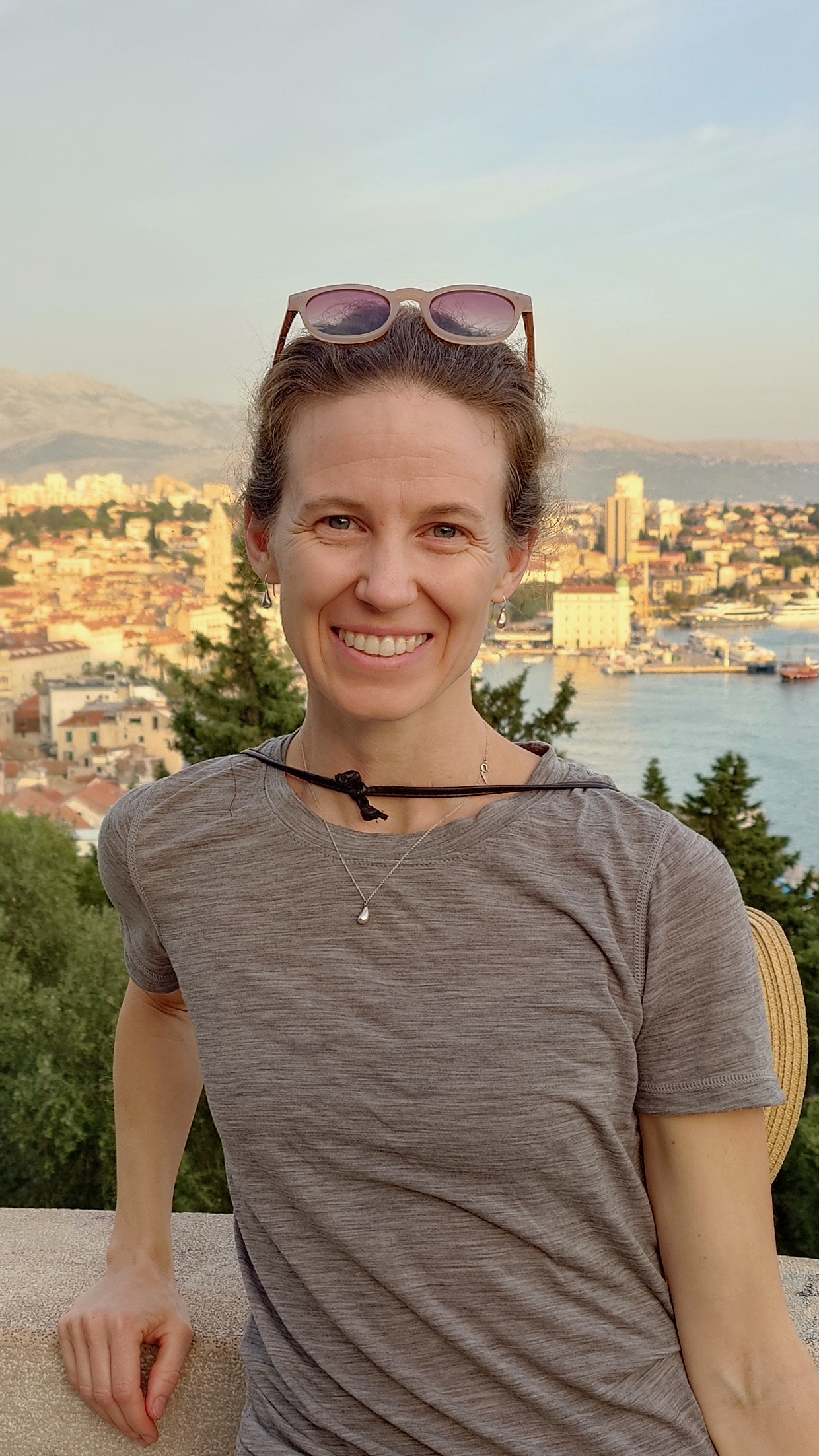
I am a PhD candidate in Earth Sciences at the University of Southern California, advised by Julien Emile-Geay. My background spans mathematics, physical oceanography, and data science, with research stints at Woods Hole Oceanographic Institution and several years in industry as a data scientist before returning to graduate school. My work sits at the intersection of paleoclimate and nonlinear time series analysis, with a recurring focus on the question of whether apparent relationships in the climate record reflect genuine dynamical influence.
Research Interests
The central problem motivating my research is causality in nonlinear systems. In Earth’s climate, correlation is not only an unreliable guide to causal structure — it can be actively misleading: two causally linked variables can exhibit intervals of positive, negative, or no correlation depending on system state, while two unrelated variables can appear coherent because of a shared driver. Standard associative approaches, including spectral analysis, cannot resolve this ambiguity.
I use Convergent Cross Mapping (CCM) to approach these questions more carefully. CCM tests whether the state space of one variable carries recoverable information about another — a condition that, under the theory of dynamical systems, is only satisfied in the presence of genuine coupling. My dissertation applies this framework to questions in Holocene and Pleistocene paleoclimate.
Resume
Education
Ph.D. Candidate, Earth Sciences
2022 – present
University of Southern California, Los Angeles, CA
MA, Earth and Environmental Science
2010 – 2013
Columbia University, New York, NY
BA, Mathematics
2004 – 2009
Williams College, Williamstown, MA
Professional Experience
Data Scientist, Syntouch Inc
2020 – 2022
Haptics consulting
Data Scientist, Greenwings Biomedical Inc. (Neuroscience)
2017 – 2019
- NSF iCorps Entrepreneurial Lead
- Assessing cognitive impairment using MF-DFA
Research Assistant, Woods Hole Oceanographic Institution
2009 – 2010
- Supervisor, Delia Oppo
- KNR 157 + Lab work
Overview
- All
- Paleoclimate Causality
- Open Science & Edu
- Software
- Extra Science
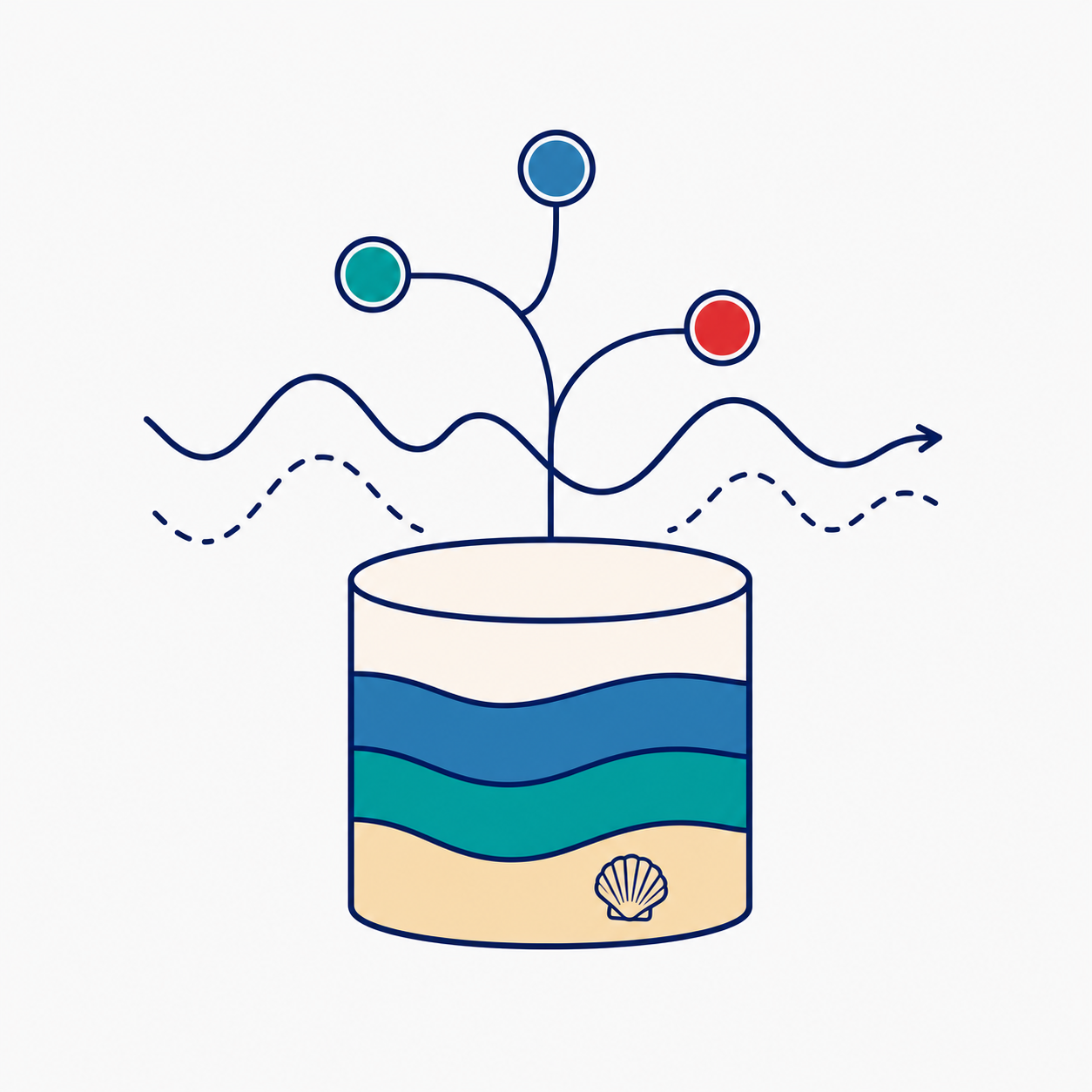




Nonlinear Causality in Paleoclimate: nonlinear dynamics, proxy-data synthesis, and causal analyses of Holocene climate variability.
- 2026. Landers, J.P., Emile-Geay, J., James, A.K., Munch, S.B., Bard, E., & Khider, D.. “A causal examination of the solar influence on Holocene climate”. Geophy. Res. Let. Accepted.
Open Science & Edu: transparent workflows, teaching, and community-first scientific communication.
Software: open-source scientific Python tools for paleoclimate analysis and reproducible research.
- 2022. Khider, D., Emile-Geay, J., Zhu, F., James, A., Landers, J.P., Ratnakar, V. & Gil, Y.. “Pyleoclim: Paleoclimate Timeseries Analysis and Visualization With Python”. Paleoceanography and Paleoclimatology.
Extra Science:
- 2021. Guilderson, T.P., Allen, K.A., Landers, J.P., Ettwein, V.J. & Cook, M.S.. “Can We Better Constrain the Timing of GNAIW/UNADW Variability in the Western Equatorial Atlantic and Its Relationship to Climate Change During the Last Deglaciation?”. Paleoceanography and Paleoclimatology.
Nonlinear Causality in Paleoclimate
In nonlinear systems, such as Earth’s climate, that evolve under the influence of internal states, feedback mechanisms, and external drivers, characterizing causality is no simple task. I use Convergent Cross-Mapping to test for genuine causal coupling in Paleoclimate contexts where correlation alone can be misleading or even absent between truly linked variables.
- 2026. Landers, J.P., Emile-Geay, J., James, A.K., Munch, S.B., Bard, E., & Khider, D.. “A causal examination of the solar influence on Holocene climate”. Geophy. Res. Let. Accepted.
PaleoBooks
Paleoclimate research is interdisciplinary and messy, and the reasoning behind an analysis — the preprocessing choices, the tradeoffs — rarely makes it into a paper. PaleoBooks is a community-built gallery of notebooks and tutorials that document that reasoning openly, making good analysis practices as easy to find and reuse as the results themselves.
Pyleoclim
Developer, Pyleoclim (2022–present)
- 2022. Khider, D., Emile-Geay, J., Zhu, F., James, A., Landers, J.P., Ratnakar, V. & Gil, Y.. “Pyleoclim: Paleoclimate Timeseries Analysis and Visualization With Python”. Paleoceanography and Paleoclimatology.
Climate Critters
Developer, ClimateCritters (2023–present)
Cedarkit
Developer, CedarKit (2025–present)
Tracers & Watermass Geometry
Water masses leave a signature in how ocean tracers like temperature and salinity are distributed, but describing that structure rigorously is harder than eyeballing it. I am interested in applying clustering methods to do this reproducibly and interpretting how choice of algorithm and feature set affects patterns in watermass geometry.
C14
- 2021. Guilderson, T.P., Allen, K.A., Landers, J.P., Ettwein, V.J. & Cook, M.S.. “Can We Better Constrain the Timing of GNAIW/UNADW Variability in the Western Equatorial Atlantic and Its Relationship to Climate Change During the Last Deglaciation?”. Paleoceanography and Paleoclimatology.
Teaching & Community Involvement
USC
- 2026 Teaching Assistant, GEOL351: Climate Dynamics
- 2024 Teaching Assistant, GEOL351: Climate Dynamics
- 2023 Teaching Assistant, GEOL150: Climate Change
- 2022 Teaching Assistant, GEOL351: Climate Dynamics
Columbia University
- 2012 Teaching Assistant, Chemical Oceanography
- 2010 Teaching Assistant, Atmospheric Science
Workshops & Outreach
- 2024-2025 Paleo/Environmental Seminar Co-Organizer (USC)
- 2023-2024 Graduate Student Representative (Earth Sciences Department, USC)
- 2023 Instructor, BYOD Workshop (USC/ISI)
- 2010 Outreach contributor, Demerara Rise Cruise Blog (WHOI)
Get in touch!
Think there might be an idea we could collaborate on? Have a postdoc opportunity that needs filling? Get in touch! (Contact information in my CV as a (likely ineffective) tactic to reduce spam.)